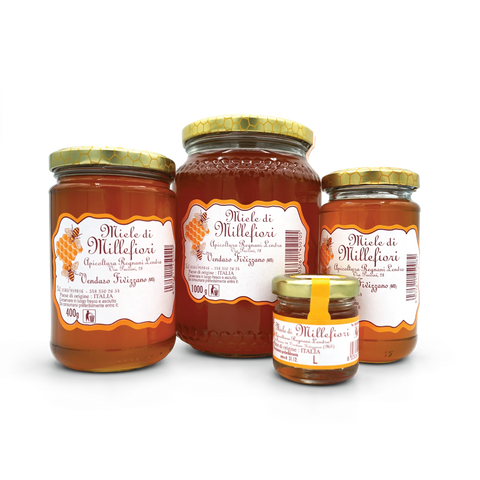
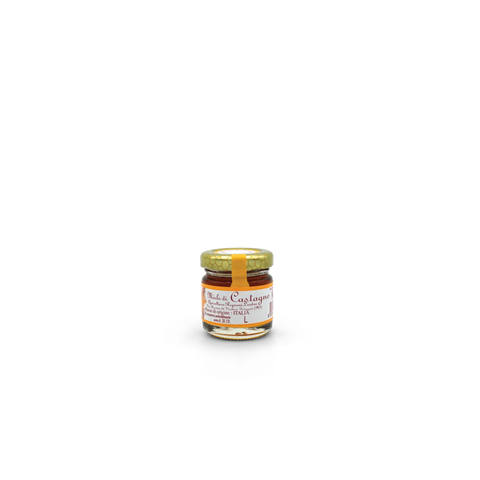
No two jars of wildflower honey are ever the same. This is not a flaw. It is, in fact, its greatest beauty. While single-origin honeys like acacia or chestnut deliver a consistent flavour year after year, millefiori tells a different story with every harvest, a story written by whichever flowers happened to bloom that season.
For us, opening the first jar of the year's wildflower harvest is always a moment of anticipation. What will it taste like this time? Will the linden notes dominate, or will the clover come through? Every year, nature surprises us.
A honey shaped by the landscape
The word "millefiori" means a thousand flowers, and that is exactly what this honey is: the combined nectar of every wildflower, herb, and tree blossom that our bees visit throughout the season. In spring and early summer, when meadows and hedgerows are at their most abundant, the bees forage across dozens of species in a single day.
This is where the concept of terroir comes in. Just as wine reflects the soil and climate where the grapes grow, wildflower honey reflects the landscape where the bees forage. Our honey carries the flavour of the hills, meadows, and woodlands surrounding our apiaries. A wildflower honey from Tuscany will taste different from one produced in Piedmont or Sicily, because the flora is different. Even within our own territory, a jar from the valley will have a different character from one harvested higher up, where the wildflowers bloom later and the air is cooler.
From our notebook: We keep a tasting journal for every wildflower harvest. Looking back over the years, we can trace how dry springs produce a more intense, amber honey, while rainy seasons yield a lighter, more floral character. Each jar is a snapshot of that year's weather.
Why wildflower honey changes every year
If you have been buying our wildflower honey for a few years, you may have noticed that no two batches are identical. The colour might range from golden amber to deep bronze. The flavour can shift from light and floral to rich and herbaceous. This is completely natural and, for a beekeeper, it is one of the most fascinating aspects of the craft.
The reason is simple: nature does not repeat itself. A warm, dry spring might bring an abundance of wild thyme and rosemary, giving the honey herbal, aromatic notes. A wet spring might favour clover and dandelion, resulting in a milder, more delicate flavour. Late frosts can delay certain blooms, shifting the entire balance of the nectar flow. The bees simply work with whatever nature provides, and the honey reflects that honesty.
Biodiversity in a jar
There is something deeper at work in every jar of wildflower honey: it is a measure of biodiversity. The richer and more varied the landscape, the more complex and interesting the honey becomes. When wildflower areas disappear, replaced by monocultures or urban sprawl, the honey becomes simpler, less layered, less alive.
This is why we take the health of the land around our apiaries so seriously. We work with local farmers who maintain hedgerows and wildflower margins. We avoid placing our hives near intensively farmed areas. And we never treat our land with pesticides. The result is a honey that reflects a thriving ecosystem, not a depleted one.
When you taste the complexity in a good Italian wildflower honey, you are tasting biodiversity itself. The more flavour notes you can detect, the healthier the landscape that produced it.
How to appreciate wildflower honey
Because of its complexity, wildflower honey rewards a slower approach. Rather than simply spreading it on toast, try tasting it on its own first. Let a small amount melt on your tongue and notice how the flavour evolves. You might catch a bright floral note at the start, followed by something warmer and deeper, perhaps a hint of chestnut or wild herbs.
In the kitchen, wildflower honey pairs beautifully with aged cheeses, particularly pecorino and parmigiano. It works wonderfully in salad dressings, bringing a rounded sweetness that balances vinegar or citrus. And in baking, it adds a depth of flavour that single-origin honeys simply cannot match.
A family tradition: Every autumn, when the last wildflower harvest is in, we gather around the table and taste it together. My father always says the same thing: "This is what our land tasted like this year." It is his way of reading the landscape through honey.
Discover our wildflower honey, harvested from the biodiverse meadows of our territory. Every jar tells the story of a season, a landscape, and the thousands of flowers our bees visited to create it.