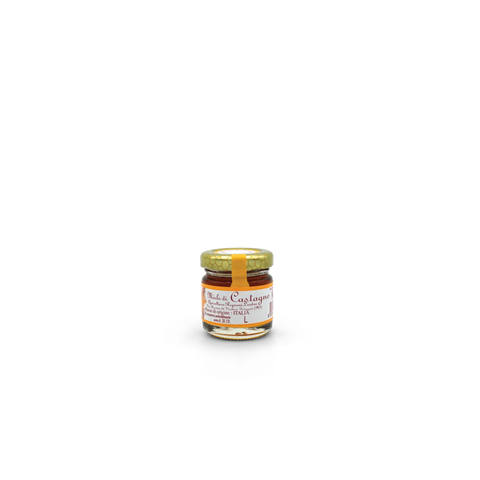
You reach into the pantry for your jar of honey and find that the golden liquid has transformed into something thick, opaque, and grainy. Your first instinct might be to think it has gone bad. In fact, the opposite is true. Honey crystallisation is one of the clearest signs that your honey is pure, authentic, and has not been industrially processed.
What crystallisation actually is
Crystallisation is a completely natural physical process in which the sugars in honey, mainly glucose and fructose, organise themselves into ordered crystalline structures. The texture changes from liquid to solid or semi-solid, but every nutritional and organoleptic property remains perfectly intact. Nothing is lost, nothing is damaged. The honey is simply changing form, the way water becomes ice without losing any of its essential nature.
The speed and character of crystallisation depend primarily on the ratio of glucose to fructose. Honeys with a higher proportion of glucose crystallise faster and more finely. Honeys with more fructose stay liquid longer or may never crystallise at all. This is why acacia honey remains beautifully liquid for months, while sunflower honey solidifies within weeks into a fine, creamy mass.
The authenticity test: If a honey stays perfectly liquid for many months on the shelf, it has almost certainly been pasteurised or ultra-filtered. Genuine raw honey from most floral sources will crystallise naturally over time. It is not a defect. It is proof of quality.
What influences the process
Several factors beyond sugar composition affect how honey crystallises. Temperature plays a significant role: the ideal range for crystallisation is between 10 and 18 °C. Below that, the process slows dramatically. Above 25 °C, it almost stops entirely. This is why honey stored in a cool pantry will crystallise faster than honey kept in a warm kitchen.
The presence of natural particles also matters. Pollen grains, tiny wax fragments, and other microscopic elements act as "seeds" around which crystals form. This is why heavily filtered industrial honey crystallises more slowly. The natural particles that would kickstart the process have been stripped away, along with much of the honey's nutritional value.
Why crystallisation signals quality
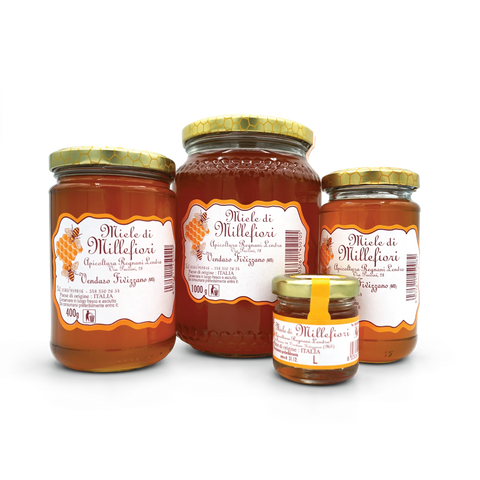
When our wildflower honey crystallises on your shelf, it is telling you three important things. First, that it is pure and unadulterated. Honeys diluted with industrial syrups or subjected to extreme heat treatments often do not crystallise naturally. Second, that its beneficial properties are preserved: the enzymes, vitamins, volatile aromatics, and antibacterial compounds that make honey so valuable are all still present. Third, that it was recently harvested and has not undergone treatments that alter its natural composition.
The type of crystallisation can even tell you about the honey's botanical origin. Fine, creamy crystals suggest a high-glucose honey like sunflower or rapeseed. Medium, granular crystals are typical of chestnut or wildflower. And very slow or absent crystallisation points to high-fructose varieties like acacia or honeydew.
How to handle crystallised honey
If you prefer your honey liquid, the solution is simple: place the jar in a warm water bath at no more than 40 °C and stir gently from time to time. The crystals will dissolve gradually, returning the honey to its liquid state. Never use a microwave or direct heat, as temperatures above 45 °C begin to degrade the very enzymes and compounds that make raw honey so beneficial.
But we would encourage you to try crystallised honey as it is. Spread it on warm toast, where the heat of the bread softens it just enough. Stir it into porridge, where its granular texture adds a pleasant contrast. Or simply enjoy it straight from the spoon, letting the crystals dissolve slowly on your tongue and release their concentrated flavour.
Our favourite way: Crystallised wildflower honey spread on a thick slice of sourdough bread, topped with a crumble of aged pecorino. The granular texture of the honey against the crunch of the bread and the salt of the cheese is one of the simplest and most satisfying things we know.
Embrace crystallisation as the sign of quality it truly is. Explore our collection of raw artisanal honeys and experience honey the way nature intended.