There is a precise moment in summer when everything changes in the apiary. The air grows thick with a sweet, warm fragrance, the bees buzz with a different rhythm, more intense, almost frantic, and we know the time has come. The honey is ready.
At the Regnani household, harvesting honey has never been just a job. It is a ritual that repeats every year, guided by the seasons and by respect for our bees. In this article, we take you along with us, from opening the hive to the jar that arrives on your table, to show you what it truly means to produce artisanal Italian honey.
When the honey is ready for harvest
Bees do not work according to our calendar. They set the pace, and a good beekeeper learns to listen. The most important signal is capping: when the bees seal the honeycomb cells with a thin layer of wax, they are telling us that the honey has reached the right maturity and the water content has dropped below 18%.
My father taught me this the first time he brought me to the apiary, at eight years old. "Hold the frames up to the light," he said, "when the wax is sealed, the honey is ready. Bees never get it wrong." It is a lesson I have never forgotten.
Before every harvest, we check each individual frame by hand. There are no shortcuts: if a comb is not fully capped, we leave it in the hive. Honey harvested too early would contain too much water and risk fermenting. And that is not the honey we want to offer you.
Cold extraction: the heart of our process
Once the honey supers are brought to the laboratory, the most delicate phase begins. We remove the wax cappings with an uncapping fork, a simple gesture that requires a steady hand and patience, and then we place the frames into the honey extractor, a centrifuge that draws out the honey without ever applying heat.
This is what we mean when we talk about cold extraction. The honey is never heated above the natural temperature of the hive, which sits around 35 °C. Why does this matter so much? Because heat is the silent enemy of honey. Above 40 °C, natural enzymes begin to break down. Above 60 °C, many of the properties that make honey such a precious food are lost.
After extraction, the honey rests for several days in settling tanks, large stainless steel containers where light impurities, such as air bubbles and small wax fragments, rise naturally to the surface. No industrial filters, no forced pressure. Just time and gravity.
When the honey is clear and clean, we bottle it. Every jar is filled, sealed, and labelled in our own laboratory. From flower to glass, the honey never leaves our care.
What makes artisanal honey different
The difference between our honey and industrial honey is not just in the flavour, although a single taste is enough to notice it. It is in the entire process.
Industrial honey is often heated to high temperatures to keep it liquid longer on shop shelves, filtered through micro-filters that strip away pollen and natural particles, and sometimes blended with honeys from different origins to achieve a standardised taste. The result is a uniform, predictable product that has lost part of its soul.
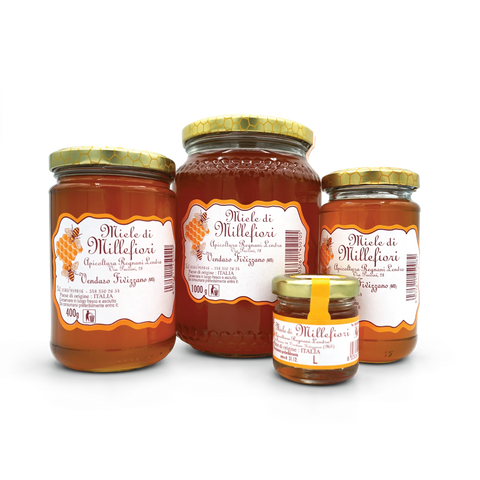
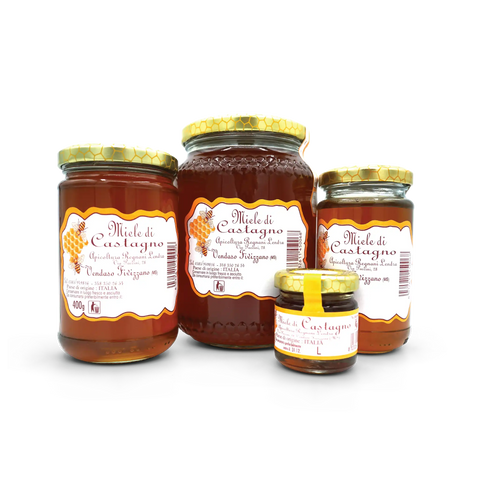
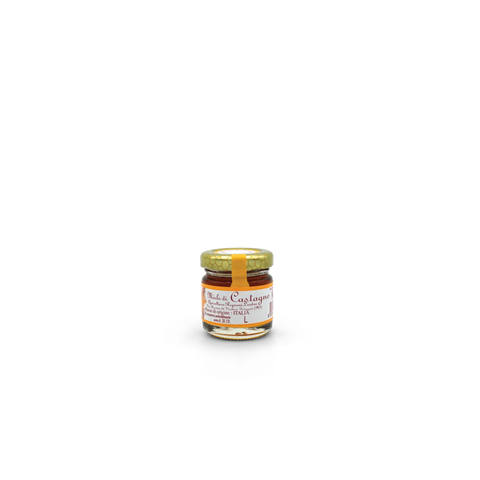
Our artisanal honey preserves everything. The pollen stays in place, and that is precisely why, over time, it crystallises naturally: a sign of authenticity that many mistake for a flaw. The enzymes remain active. The aroma tells the story of our land: the delicate perfume of acacia blossoms in spring, the intense and slightly bitter notes of chestnut in summer, the complexity of wildflower honey that shifts in character every year, because every year the blooms are different.
When you open a jar of Regnani honey, you are opening a small photograph of our territory, captured by the bees at a precise moment of the year.
Respect as the main ingredient
If there is one thing we have learned across generations of beekeeping, it is that good honey is born from respect. Respect for the bees, which we never push beyond their natural rhythms. Respect for the land, which we tend so it continues to offer rich and healthy blooms. And respect for you, who entrust us with an important choice: what to bring to your table.
Every jar that leaves our laboratory carries this promise. It is not just honey. It is the fruit of a year of work, attention, and passion for an ancient craft that we continue to practise as we were taught.
Discover our selection of artisanal Italian honeys and taste the difference that only genuine care can make.