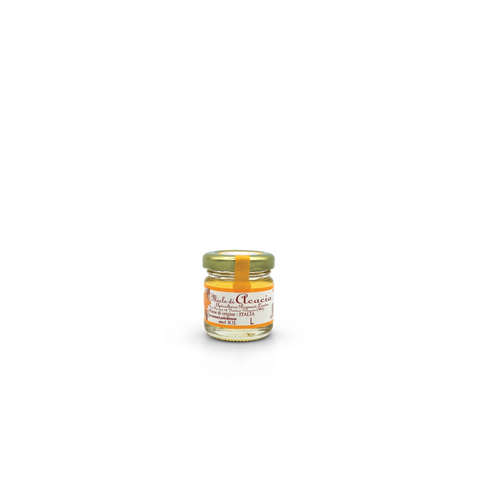
Every spring, there is a narrow window of just ten to fifteen days when the robinia trees burst into cascades of white, fragrant blossoms. For us beekeepers, this is one of the most exciting and nerve-wracking moments of the year. A single storm at the wrong time can compromise the entire harvest. But when the weather holds and the bees do their work, the result is something extraordinary: acacia honey, liquid gold with a clarity and delicacy unlike any other.
What makes acacia honey so special
Acacia honey stands out immediately for its liquid consistency that lasts over time. Unlike other honeys that crystallise within weeks, acacia honey remains beautifully fluid for months, thanks to its high fructose content compared to glucose. This makes it a favourite for drizzling over fresh ricotta, stirring into tea, or using in delicate recipes where you want sweetness without altering the flavour.
The aroma is gentle, with floral notes that recall the robinia blossoms from which bees gather nectar. On the palate, the flavour is sweet but never cloying, with a vanilla-like aftertaste that makes it perfect for children and for anyone who does not enjoy overly intense flavours.
Did you know? In Italy, we call this honey "acacia" even though it actually comes from the flowers of Robinia pseudoacacia, commonly known as false acacia or black locust. The name has stuck for generations, and no Italian beekeeper would dream of changing it.
Properties and benefits for your health
Acacia honey is far more than a delicious sweetener. It is naturally rich in fructose, which provides immediate and sustained energy, along with digestive enzymes that promote intestinal well-being. It contains antioxidants that help fight free radicals, minerals such as potassium, calcium, and magnesium, and small amounts of B vitamins that support your daily vitality.
What sets it apart from other honeys is its relatively low glycaemic index, making it a more suitable option for those who need to keep an eye on their blood sugar. Its natural antibacterial properties also make it a trusted ally for soothing throat irritation during seasonal changes.
In the Italian countryside, grandmothers have always recommended acacia honey dissolved in warm milk to help children sleep, or mixed with fresh lemon juice to calm a stubborn cough. What folk wisdom knew by instinct, science now confirms through research.
The art of producing acacia honey
Producing acacia honey is one of the greatest challenges in beekeeping. The bloom window is incredibly short, and everything depends on the weather. We must be ready to position our hives near robinia groves at precisely the right moment, often moving them at dawn before the first flowers open.
During flowering, our bees work tirelessly from first light to dusk. A strong colony can produce up to 20 to 30 kilograms of acacia honey under optimal conditions. But beekeeping is a lesson in humility: a single late frost or a few days of rain during that precious window, and the entire season's harvest is lost.
Our extraction is carried out with extreme care. We use cold techniques to preserve every organoleptic property, filtering the honey only enough to remove small impurities while keeping the pollen and natural enzymes intact. The result is a honey that tastes exactly as the bees intended it.
How to recognise quality acacia honey
True acacia honey reveals itself through several telltale signs. Its colour should be pale gold, almost transparent, like sunlight captured in a jar. The consistency should be perfectly liquid, without any cloudiness or tendency to crystallise in the short term. The aroma should be subtle and floral, never overpowering. And the taste should be clean and sweet, with that distinctive vanilla-like finish that lingers gently on the palate.
When choosing acacia honey, look for Italian origin and a producer who can tell you exactly where and when it was harvested. Mass-produced blends labelled simply as "acacia honey" often come from eastern Europe or China and lack the depth and purity of a single-origin Italian product.
Our favourite ways to enjoy it
Over the years, we have discovered that acacia honey is wonderfully versatile. In the morning, it transforms a simple bowl of Greek yogurt into something special. At lunch, a drizzle over fresh goat cheese with walnuts makes an elegant starter. In the evening, a teaspoon in chamomile tea becomes the perfect way to wind down. And in baking, it adds moisture and sweetness to cakes without overpowering other flavours.
Discover our acacia honey, harvested each spring from the robinia groves of our territory, and taste the difference that patience and care can make.